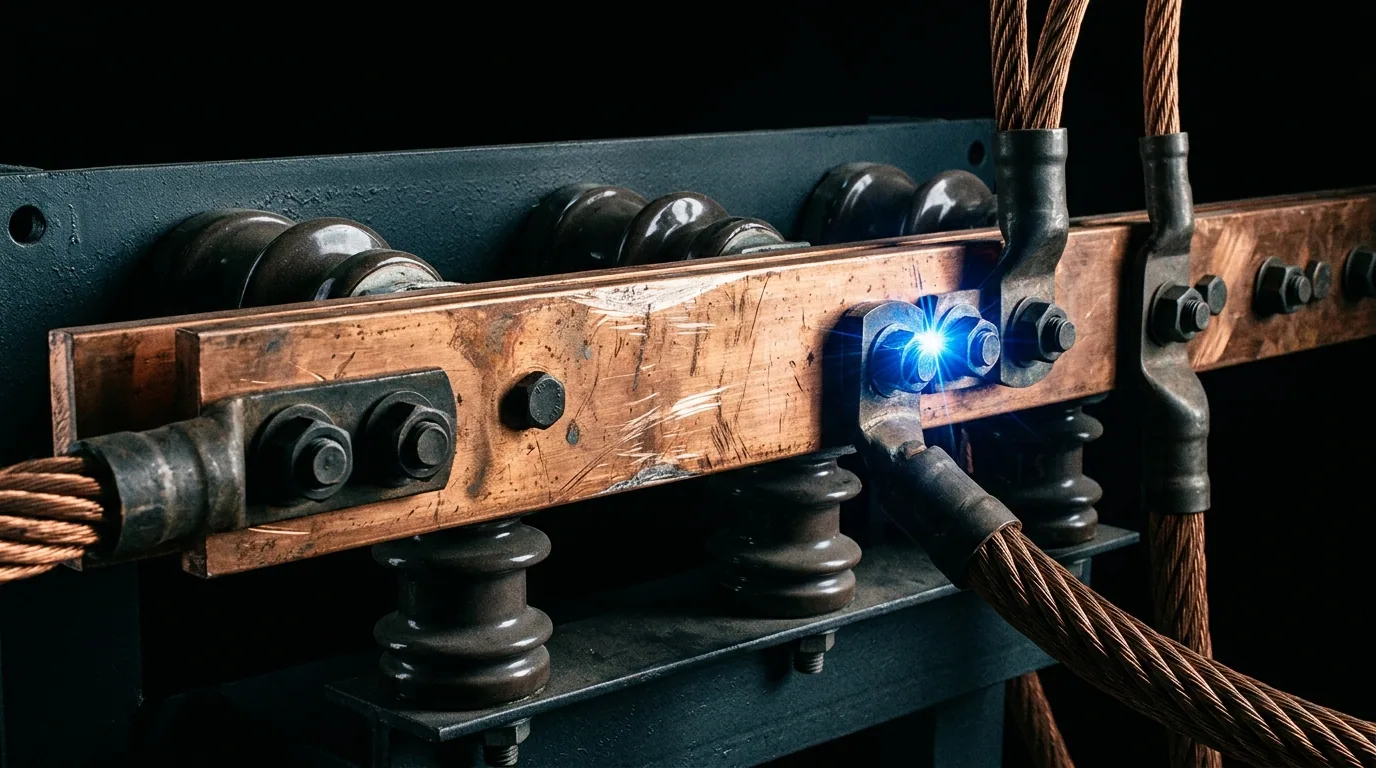
How 1800W GPU Power Killed Air Cooling For Good
The first Rubin quotes started landing in operator inboxes in May 2026 and the pattern is consistent: two data centers, same R100 SKU, same 8-GPU node, prices 30 to 45 percent apart with no obvious explanation. The explanation is power density. A single Rubin GPU pulls 1,800 watts at sustained load with the higher-bin Rubin Ultra parts headed toward 2,300W, and the air-cooled hosting market that quoted H100s around $1.15 per GPU per hour on the low end and $1.50 to $2.00 at the higher end simply cannot deliver Rubin at any price. The hosting market did not just get more expensive. It split in two.
The power curve has been steep for years and most teams under-counted it. A100 SXM4 was 400W. H100 SXM5 moved to 700W and the industry started writing whitepapers about whether air could still do the job. H200 stayed at 700W. B200 jumped to 1,000W. GB300 climbed to roughly 1,400W per GPU package. Rubin doubles that again at 1,800W, and the published TDPs for Rubin Ultra and the downstream Feynman generation are headed past 2,300W. Every doubling has compressed the air-cooled envelope and Rubin is the generation that closed it.
What does "air cooling officially died" actually mean in practice. It means an NVL72-class rack pulls 120 to 140 kilowatts at sustained training load, where a legacy hyperscale rack was provisioned for 8 to 15 kW. It means the rear-door heat exchangers most colos bolted onto existing cabinets to handle H100s top out around 50 to 70 kW per rack. It means the data center has to be re-architected for warm-water cold-plate loops at the chip, with the air side handling only the secondary load of memory, NIC, and PSU heat. There is no path where a buyer with an air-only contract takes Rubin delivery in 2026 without an infrastructure rebuild.
| GPU | TDP per GPU | Rack power (8-GPU) | Cooling required |
|---|---|---|---|
| A100 SXM4 | 400W | 6-8 kW | Air |
| H100 SXM5 | 700W | 10-14 kW | Air or rear-door |
| H200 SXM5 | 700W | 10-14 kW | Air or rear-door |
| B200 | 1,000W | 14-18 kW | Rear-door minimum |
| GB300 (per package) | 1,400W | 130-145 kW NVL72 | Direct liquid |
| Rubin R100 | 1,800W | 180-220 kW NVL144 | Direct liquid required |
What A Liquid-Cooled Rack Actually Costs To Deploy
Operators throw the phrase "liquid cooled" around as if it were a single line item. It is not. The deployed cost stacks across the chip, the rack, and the plant, and each layer has different amortization terms that show up differently in the hourly quote you eventually get.
At the chip and rack layer, the figure most operators converge on is roughly $50,000 per GB300 NVL72 rack in cold-plate hardware, manifolds, quick-disconnects, and the per-rack coolant distribution unit. That is on top of the GPU and switch hardware. Rubin NVL144, with double the GPU count and higher pressure budgets, early industry estimates suggest cooling-only capex is running closer to $75,000 to $90,000 per rack based on partner reference designs circulating in the supply chain. None of that includes the secondary plant.
The plant is where the real money sits. A facility-side liquid loop with 250 kW CDUs, dry coolers or wet towers, glycol or treated-water inventory, leak-detection plumbing, and the structural work to route 2-inch supply and return lines up the building runs $500,000 to $2 million per megawatt of cooled capacity depending on whether the operator is building greenfield, retrofitting a warm-aisle facility, or grafting onto an existing district loop. Spread across a 7 to 10 year amortization, that is $7 to $30 per GPU per hour in pure cooling capex recovery before the GPU itself, the network, or the power bill enters the math.
The PUE math compounds the spread. A purpose-built warm-water liquid facility runs at 1.05 to 1.10 PUE. A retrofitted hot-aisle facility with bolt-on rear-door exchangers struggles to hit 1.25 even with everything tuned. At a 2 MW deployment, that PUE delta is roughly 300 kW of pure overhead the second site is paying for nothing, every hour of every day for the life of the contract. That is the bill the buyer eventually sees.
Why Two Data Centers Quote Wildly Different Rubin Prices
When a buyer asks why DC A quoted $4.10 per Rubin per hour and DC B quoted $5.85 for what looks like an identical 8-GPU node, the operator usually mumbles something about "market conditions." The real answer is mechanical. There are five variables and each one is worth between 5 and 25 percent of the hourly rate.
First, retrofit cost recovery. A site that absorbed liquid cooling capex in 2022 or 2023 for an HPC tenant has already amortized most of the plant. A site standing up its first liquid loop in Q2 2026 has the full capex stack on the meter and will not give it back. That alone can account for $1.00 to $1.50 per GPU per hour over a 24-month contract. Second, PUE. The 1.10 vs 1.25 spread we just walked through translates directly into the power bill the operator passes through.
Third, water cost. A facility on municipal water at $4 per 1,000 gallons in Phoenix is in a very different position than one running a closed glycol loop in upstate New York where the makeup water is essentially free. Fourth, contract length and the amortization curve. A 12-month deal on a brand-new liquid plant will price worst case; a 5-year deal lets the operator spread the same capex over more billable hours and undercut their own short-term rate by 20 to 30 percent. Fifth, the power contract itself. A site on a 6 cent per kWh industrial tariff in Texas is structurally cheaper than the same hardware sitting on a 14 cent retail metro tariff in Northern Virginia, and Rubin makes every cent of that delta matter.
When you see five variables stacked together, a $1.50 to $2.50 spread between two technically capable Rubin sites is not unusual. It is the expected outcome. The job for the procurement team is reading which variables apply to a given quote, not assuming the lower price is hiding worse hardware.
| Variable | Typical spread per GPU per hour | Who controls it |
|---|---|---|
| Retrofit capex recovery | $0.80 to $1.50 | DC operator |
| PUE delta (1.10 vs 1.25) | $0.20 to $0.45 | DC operator |
| Power tariff (6c vs 14c kWh) | $1.10 to $1.80 | DC location |
| Contract length amortization | $0.40 to $0.90 | Buyer |
| Water and glycol overhead | $0.05 to $0.15 | DC operator |
The Liquid Cooling Lock-In Nobody Warns You About
Switching providers mid-contract was always painful with H100s. With Rubin it is materially worse, and the contract templates floating around in Q2 2026 are not catching up fast enough to protect the buyer. The asymmetry is structural. With air-cooled hardware, the operator's sunk capex is mostly in shared facility power and HVAC. The tenant rack is fungible. With liquid-cooled hardware, the operator has poured five to six figures into a manifold, cold plates, and a secondary loop that is physically married to a specific rack footprint and a specific GPU SKU. They want a long contract to amortize it. You want flexibility because Rubin Ultra is six months behind Rubin and Feynman is already on the roadmap.
The negotiation pressure point is the early-termination clause. Default templates from neocloud operators in May 2026 are writing 70 to 90 percent capex recovery into the termination fee, which on a 2 MW deployment is a $3 to $5 million check to walk away at month 18 of a 36-month deal. Push back on three specifics. First, the recovery percentage should step down monthly, not stay flat. Second, the buyer should have the right to assign the contract to another tenant if the operator can release the seat in 60 days. Third, the recovery base should be the cooling capex only, not GPU residual value, since the operator can redeploy the GPUs to another buyer at any moment.
Also worth reading carefully: the SKU swap clause. Several mid-tier operators are writing contracts that lock the buyer into a specific GPU SKU for the full term, which means when Rubin Ultra ships in late 2026 and you want to upgrade in place, you discover the existing contract has no swap mechanism. Demand a swap option with predefined price deltas, or at minimum a right of first refusal on upgraded SKUs at the same facility before signing.
Where The Cheapest Rubin Capacity Actually Lives In 2026
If you assumed the brand-name hyperscalers would have the lowest Rubin prices because of scale, the May 2026 data says otherwise. The cheapest Rubin capacity is sitting in three categories of facility that already paid the liquid cooling tax years ago for unrelated reasons.
Category one: national lab and HPC-adjacent sites. Oak Ridge, Argonne, and the European exascale facilities have been running warm-water cold-plate loops since the Frontier and Aurora deployments. Several of them spun out commercial subsidiaries or partnered with operators to lease cycles. Their cooling plant is essentially free incremental capacity. Quotes from this category are landing 30 to 40 percent below greenfield neocloud retrofit pricing.
Category two: oil and gas computational centers. Seismic processing and reservoir simulation drove a generation of liquid-cooled HPC builds in Houston, Calgary, and Aberdeen. Some of those tenants downsized or shifted to public cloud, leaving stranded liquid-cooled megawatts. Operators that bought or leased those facilities can deploy Rubin into existing plant and quote against amortized infrastructure. The pricing is similarly aggressive.
Category three: crypto retrofits. This one surprises people but the math is clean. Several large North American Bitcoin operators built immersion or rear-door facilities in 2021 to 2023, then watched margins compress through the 2024 halving and beyond. A subset of those sites has been converted to GPU hosting and the buildings already have the power tariff, transformer capacity, and water-side cooling that Rubin needs. Power is often on a 4 to 6 cent industrial contract, which on a 1,800W GPU running 8,760 hours a year is worth roughly $1,200 in pure power cost savings per GPU per year vs a 12 cent retail tariff.
The implication for procurement is concrete. A Rubin RFQ that goes to AWS, Azure, GCP, and the top three named neoclouds will return a price band of $5.00 to $7.50 per GPU per hour, which lines up with the hyperscaler vs neocloud cost delta we broke down earlier this year. The same RFQ routed to the ten or twelve facilities in the three categories above will return $3.50 to $5.00 for equivalent SLA and contract length. The hard part is knowing which facilities are in which category, and that is exactly what a broker with a verified DC network is paid to map.
A Checklist For Evaluating Any Liquid-Cooled GPU Quote
Whether the quote comes from a hyperscaler, a neocloud, or a retrofit operator, the same vetting framework separates a quote you can act on from a quote that will leak surprise costs across the contract term. Walk through them with the operator before signing anything.
Cooling topology. Is the rack on direct-to-chip cold plates, rear-door heat exchangers, or single-phase immersion? Cold plate is the dominant Rubin reference design and what NVIDIA's GB300 NVL72 and Rubin NVL144 ship with. Rear-door is acceptable for B200 but not Rubin at sustained load. Immersion is technically viable but the operator base is small and the maintenance procedures are non-standard. Confirm which one you are buying, in writing.
Secondary loop ownership. The primary loop is at the chip and is owned by the rack. The secondary loop is the facility plumbing that carries heat to the dry coolers or towers. Ask who owns each loop, who is on the hook for leaks, and what the response time is on a coolant alarm. We have seen contracts where the operator owns the primary and the buyer owns the secondary, and that is upside-down for almost every realistic scenario.
Leak SLA. A leak in a liquid-cooled rack is not theoretical. The reference designs include leak detection but the response procedure varies. The contract should specify the maximum time from leak detection to GPU power-down, the maximum acceptable rack downtime per incident, and the credit schedule for missed SLAs. Anything vaguer than this is a future fight.
Inlet temperature spec. Warm-water cooling at 32 to 35 C inlet is the efficient operating point. Some retrofitted plants are still running 18 to 22 C inlet, which works but burns 15 to 20 percent more facility power. Ask for the design inlet temperature and the actual measured inlet over the last 90 days.
Power tariff transparency. Ask for the actual cents per kWh the buyer is being billed at, broken out from the rack rate. A flat $X per GPU per hour with no power line item makes it impossible to negotiate the parts independently and almost always favors the operator on long contracts.
Failover and N+1. Liquid plants need redundancy at the CDU and the dry cooler. Confirm the redundancy posture is N+1 minimum at both layers and ask what happens to your rack during planned CDU maintenance.
Exit terms. Walk through the three contract specifics from the previous section in detail before signing. Capex recovery curve, assignment rights, swap rights.
How To Route A Rubin RFQ Without Cold-Calling 30 Operators
Power-density arbitrage is the single biggest source of price spread across the 340-plus verified data centers on the ClusterBid sourcing network. Some of those facilities absorbed liquid cooling capex years ago for HPC, scientific, or crypto tenants and can quote Rubin at materially lower rates today. Others are mid-retrofit and will pass the full cost through. The point of working through a broker that knows each site's cooling topology is that a Rubin RFQ can be routed to the three to five facilities in the network that can actually deliver against your latency, contract length, and SLA requirements, instead of running blind across 30 providers and getting non-responses from the 25 that have no liquid plant.
Pricing on Rubin and GB300 capacity in the marketplace is published live on our inventory page and updated as operators add capacity. If you want a routed quote that takes the cooling topology into account, the sourcing desk handles the matchmaking and the contract review at no cost to the buyer. Pricing reflects current GPU availability as of May 2026 and can fluctuate as new operators come online and as the Rubin Ultra ramp begins in the back half of the year.
The 1,800W GPU is not a temporary inconvenience. The Feynman generation pushes density further, the cooling capex per megawatt keeps climbing, and the gap between facilities that solved this in 2022 and facilities still catching up will widen, not close. Buyers who learn to read a liquid-cooled quote in 2026 will be paying half what their competitors pay through 2028.