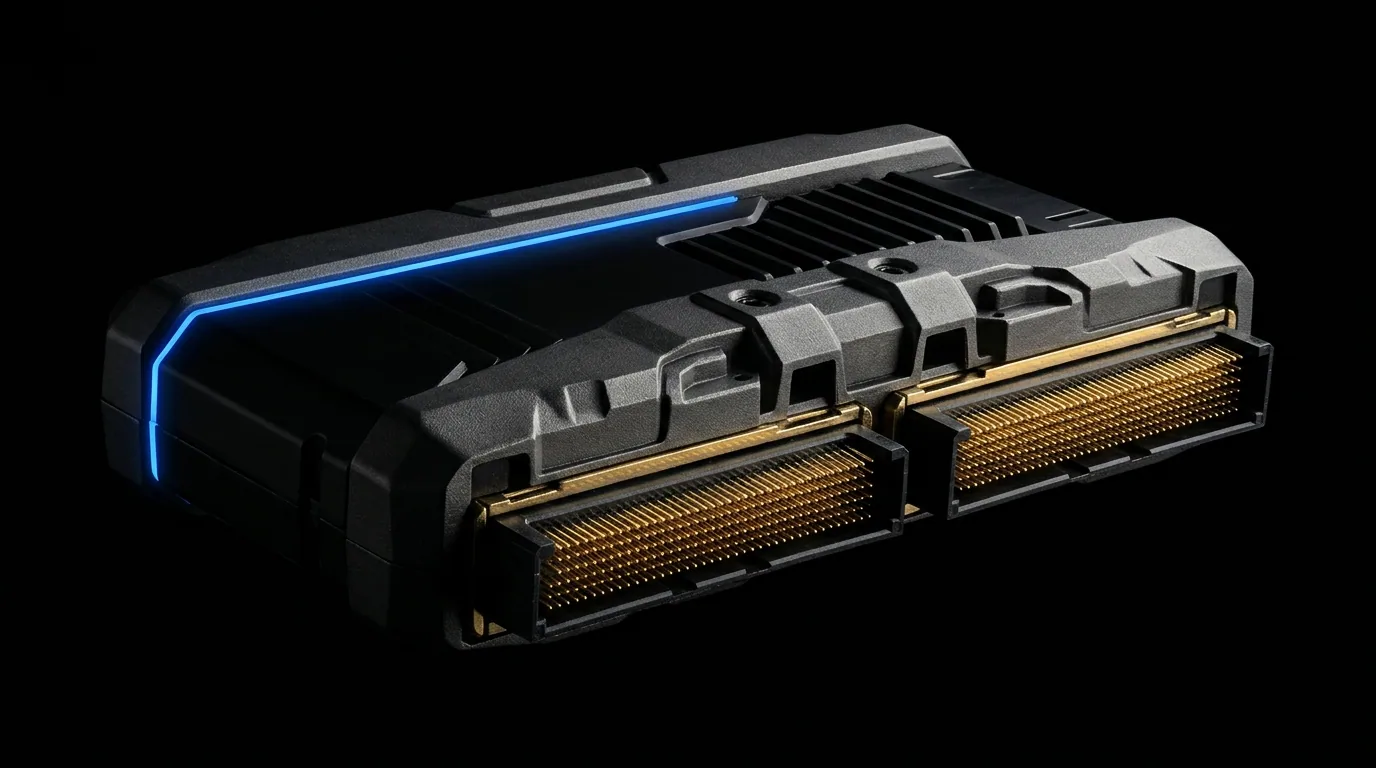
EDGE GPU HARDWARE PLATFORMS
Edge GPU hardware spans four tiers. Tier 1 micro-edge (Jetson Nano, 0.5 TFLOPS FP16, 10W) suited for simple classification at 30+ FPS. Tier 2 low-power edge (Jetson Orin NX, 40 TOPS INT8, 25W) handling single-model inference. Tier 3 mid-range edge (Jetson AGX Orin, 275 TOPS INT8, 60W) supporting multi-model pipelines. Tier 4 high-performance edge (NVIDIA L40S, 733 TOPS INT8, 350W) for near-data-center edge inference.
Selection criteria: latency requirements under 10ms favor Jetson AGX Orin for vision models. Memory capacity determines model support: 8 GB AGX runs ResNet-152 or YOLOv8x, 32 GB AGX runs Llama 3 8B quantized to INT4. Power budget is the binding constraint: a 60W edge device costs $175-$350 annually in electricity at $0.08/kWh versus $3,100 for a 350W L40S.
| Edge Platform | AI Performance | Power | Memory | Price | Best For |
|---|---|---|---|---|---|
| Jetson Nano | 0.5 TFLOPS FP16 | 10W | 4 GB | $249 | Image classification |
| Jetson Orin NX | 40 TOPS INT8 | 25W | 16 GB | $799 | Single vision model |
| Jetson AGX Orin | 275 TOPS INT8 | 60W | 32 GB | $1,999 | Multi-model pipeline |
| NVIDIA L40S | 733 TOPS INT8 | 350W | 48 GB | $8,499 | Edge LLM inference |
| Intel ARC Pro A60 | 8 TOPS INT8 | 150W | 16 GB | $1,299 | Video analytics |
EDGE MODEL OPTIMIZATION TECHNIQUES
Edge model optimization balances accuracy vs latency at strict power budgets. INT8 quantization via TensorRT reduces model size 4x with under 1 percent accuracy loss for vision models. For LLMs, INT4 quantization with AWQ achieves 7 GB for Llama 3 8B fitting in Jetson AGX Orin 32 GB memory alongside application code. Pruning removes 30-50 percent of parameters with 2-3 percent accuracy degradation on edge-specialized models.
Model distillation for edge deployment: distilling YOLOv8m into a 50 percent smaller student achieves 85 percent mAP versus 88 percent at 2x inference speed (8ms vs 16ms on Jetson Orin NX). EfficientNet and MobileNet architectures natively optimized for edge achieve 76-82 percent ImageNet top-1 accuracy at 60 FPS. Deployment framework choice (TensorRT vs ONNX Runtime vs OpenVINO) affects latency by 10-25 percent.
NETWORKING FOR DISTRIBUTED EDGE INFERENCE
Edge inference networks require sub-50ms end-to-end latency. 5G URLLC provides 1ms radio latency with 99.999 percent reliability for edge-to-device communication. Edge-to-cloud latency over fiber averages 5-15ms within the same metro region. Partial inference offloads preprocessing to edge and sends compressed feature vectors (reduced 90-95 percent data volume) to cloud for full model inference.
Federated inference across edge nodes enables model ensembling without centralizing data. Each edge node computes local predictions and shares uncertainty metrics. Central aggregator combines results weighting by model confidence. For medical imaging, federated inference achieves 94 percent accuracy versus 96 percent centralized while keeping patient data on-premise.
EDGE DEPLOYMENT AND MANAGEMENT
Edge GPU fleet management requires over-the-air updates, health monitoring, and configuration management. AWS IoT Greengrass and Azure IoT Edge manage edge device fleets. NVIDIA Fleet Command manages Jetson devices across distributed sites. Over-the-air model updates complete in 2-10 minutes per device depending on model size. Rollback on failure takes under 30 seconds using A/B partition scheme.
Edge device failure handling: disconnected operation with local inference cache for up to 7 days, automatic reconnection with model sync, and health reporting via cellular keepalive. For a 10,000-device edge fleet, annual hardware failure rate is 3-5 percent (250-500 devices). Spare device pool at 5 percent of fleet size ensures replacement within 48 hours.